An oilfield multiphase pump moves oil, gas and water from the wellhead without separating them first. It has become a practical tool for mature fields, remote well pads and offshore platforms where space and capital are tight. This article covers the design basics, the benefits you can expect and the lessons from real installations.
What Is an Oilfield Multiphase Pump?
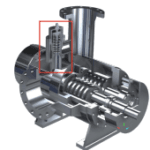
An oilfield multiphase pump is a machine designed to compress gas and pump liquid at the same time. Most designs use twin screw rotors that create sealed cavities. These cavities carry both phases from suction to discharge, so the unit is not defeated by free gas. As a result, it can sit close to the well and boost pressure before the stream reaches a separator.
Why Oilfields Adopt Multiphase Pumping
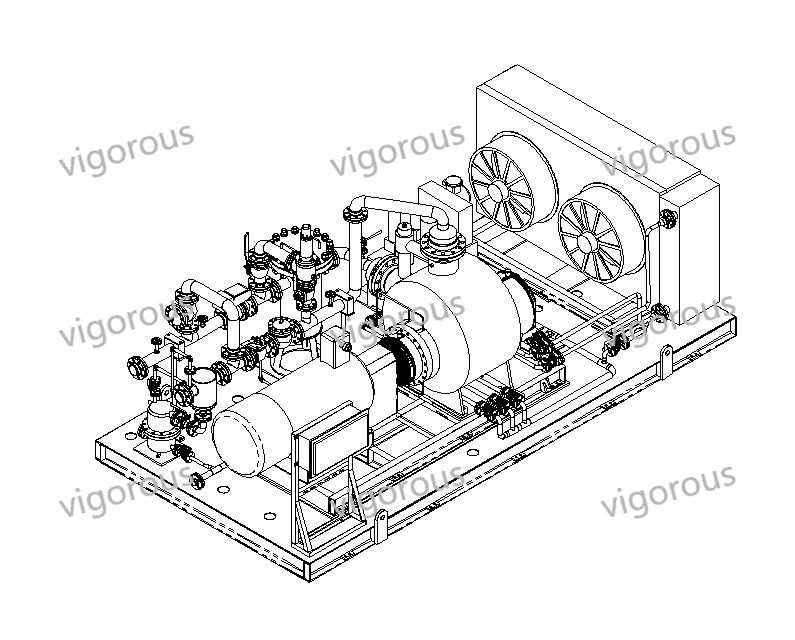
Traditional gathering needs separators, pumps for each phase and gas compression equipment. That chain is expensive and takes up valuable space. An oilfield multiphase pump replaces several pieces of hardware with one skid. In addition, keeping pressure at the wellhead reduces gas liberation and can lift production from ageing reservoirs.
- Lower capital cost: Fewer vessels and compressors to purchase and install.
- Smaller footprint: Ideal for crowded pads and offshore decks.
- Faster deployment: A pre-built skid arrives ready for commissioning.
- Better recovery: Low suction pressure helps maintain flow from the reservoir.
Key Design Considerations
Start with the gas volume fraction and the range of inflow. Slug flow is common in oilfields, so the pump and its control system must react quickly. Moreover, produced water can be corrosive and sand can be abrasive. Specify materials and coatings accordingly.
Ask your supplier how the pump performs at partial load. A unit that only works at one flow rate will create problems when the well changes. For a deeper look at selection, read our twin screw pump selection guide.
Field Case: Parallel Skids in Xinjiang
Vigorous Pump supplied four HWM50 twin screw multiphase pump skids for an Xinjiang oilfield. The units run in parallel to handle a wide flow range while keeping each pump inside its efficient band. Operators reported smooth operation and easier maintenance compared with the previous separator-based system. You can review the full Xinjiang case study.
Field Case: High-GVF Service in Shengli
In Shengli, a 15-unit order was built for high gas volume fraction service. The pumps resist gas lock and maintain steady output where conventional equipment repeatedly stalled. Details are available in our Shengli oilfield project note.
Installation and Operation Tips
Place the skid on a level foundation and keep suction piping short. Install a strainer and a low-low level trip to protect the pump during gas breakthrough. Furthermore, use a variable-speed drive so operators can adjust to changing well conditions. General industry practice on pump stations is documented by the American Petroleum Institute.
FAQ About Oilfield Multiphase Pumps
Can the pump handle sand?
Yes, within limits. Hardened rotors and replaceable liners extend life in sandy service, but inlet strainers are still recommended.
How much space does a skid need?
A compact multiphase skid typically occupies a fraction of a conventional separator train, which makes it attractive for brownfield sites.
Plan Your Oilfield Multiphase Pump Project
Vigorous Pump designs multiphase skids around real well data, including gas fraction, water cut and sand content. Send your duty point and site constraints, and our team will prepare a practical proposal. Contact us to discuss an oilfield multiphase pump for your next development.