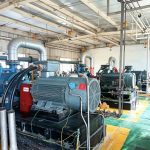
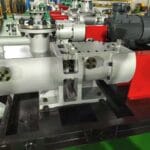
A crude oil transfer pump moves crude from wellheads and storage tanks into separators, pipelines, tank trucks or refinery feed lines. Choosing the right unit protects your uptime, your product quality and your operating budget. This guide explains the main pump types, the selection criteria that matter in the field, and why twin screw designs are gaining ground in heavy-duty transfer service.

What Is a Crude Oil Transfer Pump?
A crude oil transfer pump is a positive displacement or centrifugal machine built to move petroleum liquids between process points. Unlike a water pump, it must cope with changing viscosity, dissolved gas, abrasive solids and corrosive compounds. As a result, engineers judge a crude oil transfer pump by its ability to hold a steady flow when the fluid properties change, not only by its nameplate capacity.
In a typical gathering system, pumps move light crude, heavy crude, residual oil and stabilised oil. Each fluid behaves differently. Light crude is thin and volatile; heavy crude can be thicker than honey at ambient temperature. Therefore, the same pump rarely performs well in every duty.
Main Types of Crude Oil Transfer Pumps
Centrifugal Pumps
Centrifugal pumps suit low-viscosity crude and high-volume transfer. They offer simple construction and low purchase cost. However, efficiency drops quickly as viscosity rises, and gas pockets can cause cavitation. For these reasons, operators often pair them with heaters or boosters when handling heavy oil.
Gear and Lobe Pumps
Gear pumps deliver a compact positive displacement solution for clean, moderately viscous oil. They work well in lubrication and fuel transfer, but they dislike sand and large gas fractions. Lobe pumps handle slightly larger solids, yet they still need careful timing and maintenance.
Twin Screw Pumps
A twin screw crude oil transfer pump uses two intermeshing rotors to trap fluid and push it smoothly from suction to discharge. Because the flow is nearly pulsation-free, pipelines experience less vibration. Moreover, the design tolerates viscosity from 1 cSt to more than 100,000 cSt and can handle gas-liquid mixtures without losing prime. These advantages explain why many oilfields now specify twin screw units for crude transfer.
How to Select a Crude Oil Transfer Pump
Start with the fluid, not the catalogue. Record viscosity at the lowest expected temperature, gas volume fraction, sand content, required flow and discharge pressure. Then work through the following checklist:
- Viscosity range: Heavy crude needs a positive displacement design or a heated centrifugal system.
- Gas handling: If free gas exceeds 10 percent, look for a pump with strong gas tolerance.
- Materials: Select cast steel, stainless steel or special alloys based on sulfur and water content.
- Sealing: API 682 mechanical seals reduce leakage and extend service intervals.
- Turndown: Variable-speed drives help when daily flow swings widely.
In addition, ask your supplier for a curve that reflects your real fluid, not clean water. A vendor willing to run a viscosity-corrected test is usually a safer partner.
Typical Oilfield Applications
Crude oil transfer pumps appear in wellhead gathering, tank farm circulation, pipeline boosting, barge loading and refinery feed. In each case, reliability matters more than peak efficiency. For instance, a pump that stops every week because of gas lock costs far more than a slightly larger unit that runs continuously.
Vigorous Pump has supplied twin screw solutions for fields in Xinjiang and Shengli, including multi-unit skids built for parallel operation. You can review a related oilfield transfer case study and our crude oil pump series overview.
Why Twin Screw Designs Stand Out
A twin screw pump delivers constant flow with very low pulsation. It also self-primes, handles high-viscosity media and tolerates sand better than tight-clearance gear pumps. As a result, it often replaces a centrifugal pump plus a separate gas separator, cutting both capital cost and floor space. For a deeper technical comparison, read our twin screw crude oil pump guide.
Operation and Maintenance Tips
Keep suction lines short and generously sized. Install a strainer upstream, but choose a mesh that does not starve the pump. Monitor vibration, bearing temperature and seal leakage monthly. Furthermore, log flow and pressure trends so you can spot wear before it becomes a failure. Industry guidance on pump sealing is available from the American Petroleum Institute.
FAQ About Crude Oil Transfer Pumps
Can one pump handle both light and heavy crude?
A twin screw unit can cover a wide viscosity span, but you should confirm the minimum and maximum values with the manufacturer before ordering.
How often should seals be replaced?
With clean fluid and stable temperature, a mechanical seal often lasts 12 to 24 months. Abrasive sand shortens that life noticeably.
Get a Crude Oil Transfer Pump Built for Your Fluid
Vigorous Pump engineers select and test every unit against the actual crude, gas fraction and site conditions. Share your flow, pressure and fluid data, and our team will recommend a configuration that fits your duty. Contact us to discuss a custom crude oil transfer pump solution today.